
"AA Code 53"
9000 article(s) found

Indicates that "AA" will also have "Code 53" Zimbabwe (Zimbabwe) suitable for baking.
Zimbabwe (Zimbabwe) aroma 3% brightness 4% mellow 3% flavor 4% aftertaste 4% suitable for baking degree: City/Full City City to Full City, but the flavor will be more complete under Full city baking, it is recommended to leave it for three or four days before tasting. Zimbabwe could not grow coffee until the 1960s, but it is already of good quality, balanced and complex.

Zimbabwe coffee bean variety Zimbabwe coffee bean flavor smooth, refreshing and fruity
Professional coffee knowledge exchange more coffee bean information please follow the coffee workshop (Wechat official account cafe_style) front street-Zimbabwe coffee introduction Zimbabwe began to produce high-quality Arabica coffee more than 100 years ago, used to be like Brazil, Kenya, Ethiopia and other major producers, produce about 15000 tons of high-quality coffee beans, caffeine in Zimbabwe
What's the flavor of Zimbabwe coffee? a brief introduction to the flavor of Zimbabwe coffee beans.
Professional coffee knowledge exchange more coffee bean information please follow the coffee workshop (Wechat official account cafe_style) front street-Zimbabwe Coffee introduction Zimbabwe is located in the interior of southeastern Africa, Victoria Falls, the Zambe River (Zambesi River), the upper Zambezi River Kaliba Dam (Kariba Dam) and the dam to block the accumulation of the river formed by Lake Kaliba

Zimbabwe's main coffee producer, Mozambique, borders Manicaland and Mashonaland.
Zimbabwe aroma 3 points brightness 4 points mellow 3 points flavor 4 points aftertaste 4 points suitable for baking degree: City/Full City to Full City can be, but in Full City baking under the flavor will be more complete, it is recommended to bake after three or four days to taste. Zimbabwe was only able to grow coffee in the 1960s, but it already has good quality, balance and complexity.
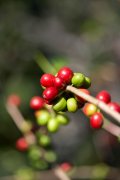
Zimbabwe grows coffee flavor
Boutique coffee has a rich and beautiful taste. Even if the coffee made of boutique coffee beans is not all fine coffee, it depends on whether it gives full play to the characteristics of coffee beans, whether it has a good taste, if not, it can not be called boutique coffee. Zimbabwe (Zimbabwe) aroma 3 minutes brightness 4 minutes mellow 3 points flavor 4 points aftertaste 4 points suitable for baking
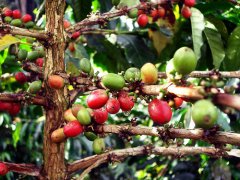
Zimbabwe Coffee walks into African Coffee
Boutique coffee (specialty coffee) is also called specialty coffee selection coffee. It refers to coffee made from a small number of raw beans with excellent taste grown in an ideal geographical environment. Depending on the special soil and climatic conditions in which they grow, they have outstanding flavor. After strict selection and classification, this kind of coffee is hard in texture, rich in taste and stylish.

Zimbabwe's top coffee beans are mainly produced in the cities of Chipinge and Mu
Zimbabwe (Zimbabwe) aroma 3% brightness 4% mellow 3% flavor 4% aftertaste 4% suitable for baking degree: City/Full City City to Full City, but the flavor will be more complete under Full city baking, it is recommended to leave it for three or four days before tasting. Zimbabwe could not grow coffee until the 1960s, but it already has good quality, balance and recovery.

Zimbabwe (Zimbabwe) thick flavor and deep flavor Uganda (Uganda) essence
Boutique coffee (specialty coffee) is also called specialty coffee selection coffee. It refers to coffee made from a small number of raw beans with excellent taste grown in an ideal geographical environment. Depending on the special soil and climatic conditions in which they grow, they have outstanding flavor. After strict selection and classification, this kind of coffee is hard in texture, rich in taste and stylish.

African upstart-- Zimbabwe Coffee producing area introduces the characteristics of Zimbabwe Coffee
Zimbabwe, located in southern Africa, is a landlocked country not near the sea, right next to Mozambique. Zimbabwe only began to grow coffee in the early 20th century, but it was almost wiped out by insect pests around 1920. Since 1950, with the migration of coffee farmers from India and Kenya to Zimbabwe, Zimbabwe has the knowledge and technology to produce quality coffee. In the 20th century

African Coffee and Raw Bean Merchants Caf é in Chipinga, Zimbabwe (Zimbabwe)
1. A variety of fine coffee. It is better to use Arabica inherent variety Tibica or bourbon variety. two。 Is the altitude, topography, climate, soil and refinement of the cultivated land or farm clear? Generally speaking, the coffee with high altitude is of higher quality, and the fertile volcanic soil is the best. 3. The harvesting method and refining method are adopted. Generally speaking, manual harvesting method and washing essence are adopted.

Programmers only! Japanese crowdfunding launched "CODE COFFEE" programming language coffee beans!
Professional coffee knowledge exchange more coffee bean information please follow the coffee workshop (Wechat official account cafe_style) in Japan fundraising platform Makuake widely acclaimed CODE COFFEE, there are C, Java, Perl, Python, Ruby, Go, JavaScript, Swift and other 8 flavors (php and .NET for QQ). Use cartoons to understand the law, or use beauty

Wahaha late, can you get a piece of the coffee market?
AD calcium milk has become a generation of childhood memories, purified water is the laboratory standing experimental water, there are code members favorite nutrition express, these are Wahaha popular products. On February 6, Wahaha launched the ready-to-drink coffee drink "Coffee Position", once again fighting the ready-to-drink coffee market. Zaiwahaha Guan
Coffee producing areas three continents: a detailed introduction of coffee beans in African producing areas
African Africa is the birthplace of coffee, and African coffee plays an important role in the whole coffee industry. Although the commercial cultivation of coffee has been developed around the world for hundreds of years, the unknown wild coffee varieties in Africa are still the greatest treasure in the hearts of coffee researchers. African coffee is generally characterized by strong aroma and charming acidity, and its sour taste is bright and lively.

Introduction to the Flavor description treatment method of Indonesian Coffee Raw Bean grading Standard
The standard for flavor description of raw coffee beans in Indonesia the size of the international practice is 9: 22, and the number used represents the diameter of the screen, with this number as the numerator and 64 as the denominator, in inches. For example, 14 refers to raw coffee beans that can be sifted through a 14-inch screen with a diameter of 64 inches, and 19 + refers to coffee that can be sifted with a diameter of more than 64 inches with a 19-inch screen.

Start with coffee beans (53)-Oceania-Papua New Guinea
The legendary background of modern coffee. In Papua New Guinea, about 75 per cent of coffee products come from small local farmers

Coffee Machine Reviews SGL Coffee Machine Parts II
Code Name Price 20 C1005 2 liter tank 30 C2311 upper panel 40 C0075 3.5*4.5 stainless steel tapping screw 50 C2312 tank cover 60 C0329 4*8 return hose L=370 70 C2315 waste water tank leakage plate 80 C2313 waste water tank bracket 90 C0076 3.5* 9.5 stainless steel tapping screw 100 EPE0126 bottom rubber pad (rear) 105 C3157 bottom
Classification standard of raw coffee beans
There are two ways to classify raw coffee beans, one is the filter number, and the other is the elevation.
There are two ways to grade green coffee beans.
There are two ways to grade coffee beans, one is to filter the number of points, one is to elevation points. The size of the round beans is generally smaller than the flat beans, the round beans are between 8-13, and the flat beans are between 12-29. 8,9,10... 12,13... 18... 29= ,,......, Extra large. The bigger the number, the bigger the bean. SC-19, for example, is bean number 19.
Graded high-quality coffee beans
There are two ways to classify raw coffee beans, one is the filter number, and the other is the elevation. It is divided by the number of the filter screen, and the size is in the unit of the screen (size). Round beans are generally smaller than flat beans, between 8-13 and 12-29. 8, 9, 10. 12, 13. 18. 29 = small, medium, ordinary. Quasi-big. Big, extra large. The bigger the size, the bigger the beans. Like SC.
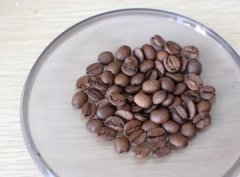
Standard for grading coffee beans
There are two ways to grade coffee beans, one is to filter the number of points, one is to elevation points. It is divided by the filter number and the size is determined by the mesh size. Round beans are generally smaller than flat beans, round beans between 8-13, flat beans between 12-29. 8,9,10... 12,13... 18... 29 = Small, Medium, Normal... It's a big... big, extra big. The bigger the number, the bigger the bean. Like SC